🏰 Manor Lords Beginner's Guide 2026 — First Year Survival, Build Order & 0.8 Update
Developer: Slavic Magic | Publisher: Hooded Horse
Steam Price: $39.99 | Current Version: 0.8 (Early Access)
Genre: Historical city-builder + real-time tactics
Platforms: PC (Steam, GOG, Game Pass)
I've put over 200 hours into Manor Lords since it launched in Early Access back in April 2024, and I'm still discovering new layers to its economy. The 0.8 update series — which hit Major Update #7 on July 10, 2026 — is the best the game has ever felt. But that also means a lot of the old beginner guides on the internet are out of date.
This guide is built from the ground up for the current 0.8 build. I'll walk you through your first hour, your first winter, and your first bandit raid — with the exact build order I use, the data behind every choice, and the mistakes that killed my first three villages so you don't repeat them.
What Is Manor Lords in 2026?
Manor Lords is a medieval settlement-builder where every worker is a person, not an abstract pop number. Your families live in burgage plots, walk to their workplaces every morning, carry tools, and eat what your village actually produces. It layers a surprisingly deep logistics and production-chain simulation on top of large-scale tactical battles — think Banished or Farthest Frontier crossed with Total War-style combat.
The game is still in Early Access at version 0.8, and it has changed enormously since launch. Here's what matters right now:

What's New in Manor Lords 0.8 (July 2026)
If you last played in 2024, a lot has changed. The 0.8 branch has been rolling out since late 2024, and Major Update #7 ("Technical Overhauls") landed on the main branch July 10, 2026. Highlights:
| Update | When | What it added / changed |
|---|---|---|
| Update 3 | Sept 2024 | Fishing, pigs, food spoilage system |
| Update 4 | Jan 2025 | Bridges, new maps, full marketplace rework |
| Update 5 | Dec 2025 | Stone castles, AI towns, building maintenance system |
| 0.8.059 | Feb 2026 | New Burgage Plot Level 3, "Twin Lakes" map, settlement level now checks families, up to 6× FPS gain in huge cities |
| Update 7 | Jul 2026 | Pathfinding overhaul, gamepad support, smarter squad formations, game-setup screen redesign |
Two 0.8 balance changes you should know before starting: - Ale is no longer consumed by Level 1 families — your tavern matters later, not on day one. - Raiders now leave after looting ~50% of your goods or torching ~40% of your settlement — a partial defense can still save you.

Step 1: Set Up a Beginner-Friendly Game
Your first few runs should be about learning the economy, not fighting for survival. Here's the setup I recommend:
| Setting | Recommendation | Why |
|---|---|---|
| Scenario | "Rise to Prosperity" | No bandit raids, no harsh weather — pure city-builder sandbox |
| Difficulty | Relaxed | Family approval is forgiving; workers are faster |
| Map | Any rich lowland region | Plenty of fertile soil + berry deposits + deer to learn on |
| Speed | Pause (Spacebar) | You can plan your whole village layout before the clock starts |
Pro tip: Unpause the game only when you know exactly what your first five buildings are going to be. A paused plan is worth 30 minutes of rework.
Step 2: The First-Hour Build Order
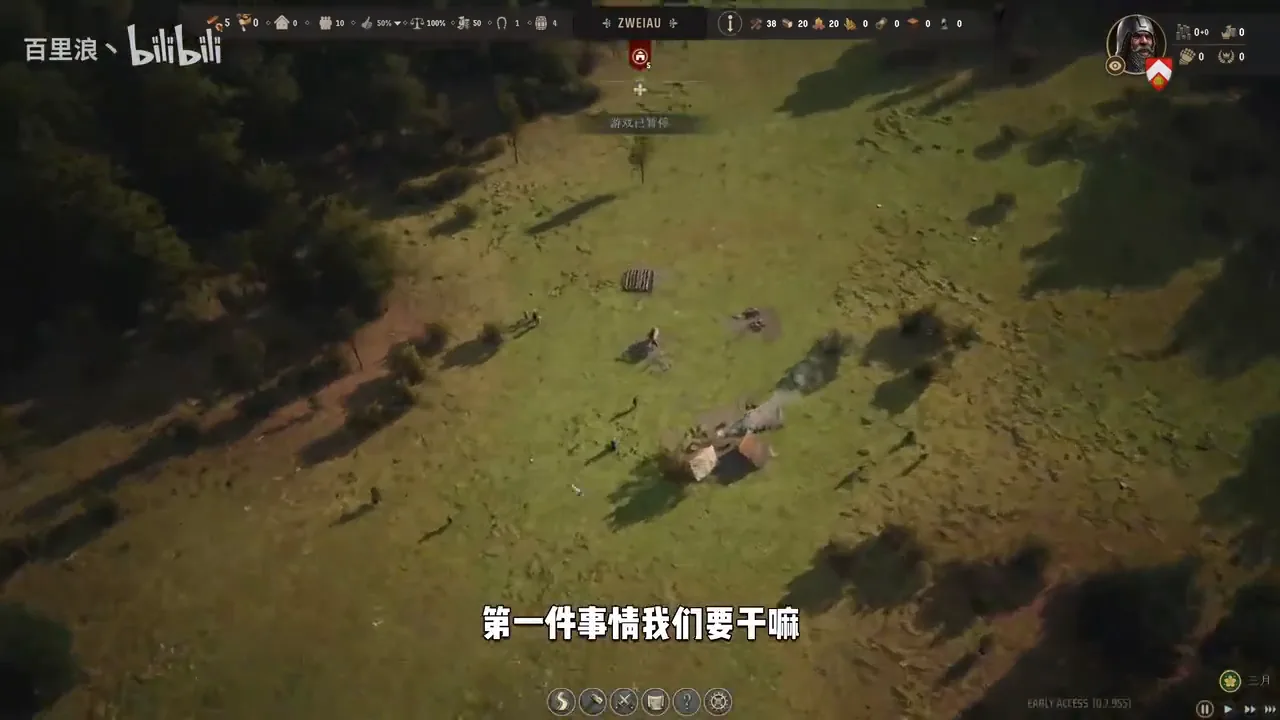
The single biggest beginner mistake is building too much, too fast. Your starting workforce is tiny (usually 3–4 families plus a few oxen), and every building you place needs a worker assigned. Over-build, and your villagers spend all day walking and never producing.
Here's the build order I follow every single run:
| # | Building | What it does | Why first |
|---|---|---|---|
| 1 | Logging Camp | Chopping camp producing timber | Timber is the backbone of everything you build |
| 2 | Woodcutter's Lodge | Produces firewood | Firewood keeps families warm — skip this and winter kills you |
| 3 | Storehouse | Stores raw materials (logs, stone, hides) | Stops your goods rotting in the open |
| 4 | Granary | Stores food | Same reason — food spoilage is a real mechanic since Update 3 |
| 5 | Burgage Plots (2–3) | Houses for your families | More homes → more families → more workers |
| 6 | Forager Hut | Collects berries | A renewable food source from day one |
| 7 | Hunting Camp | Produces meat + hides | Meat fills your second food slot |
| 8 | Marketplace | Distributes food & fuel to homes | Families stop eating raw berries if a stall is nearby |
The #1 rule: Always leave at least one family unassigned. Unassigned families handle construction and ox-driving. Assign everyone and construction stalls completely.
Step 3: Food & Firewood — the Real Survival Bar
Manor Lords has no "you're starving" popup in the same way other games do — the consequences are slower and sneakier. If families go hungry or cold, approval drops, and when approval drops, families stop arriving. The game quietly stalls.
Your food goals, in order:
| Food source | Buildings | Notes |
|---|---|---|
| 🫐 Berries | Forager Hut | Set "cap" so workers don't strip the deposit bare — it regrows over time |
| 🦌 Meat | Hunting Camp | Place it near deer trails; don't overhunt a single herd |
| 🥚 Eggs | Chicken Coop (burgage backyard) | Year-round food, zero field space |
| 🥕 Vegetables | Vegetable Garden (burgage backyard) | Big harvest, but slow to mature — plant in spring |
| 🌾 Bread | Farm → Windmill → Bakery | The "real" food chain, later |
Aim for two distinct food types by your first winter, and three by your second year. Each extra food type gives a big approval bonus.
Firewood is a year-round job. In winter, families burn roughly double the firewood — I've watched villages collapse in Month 2 of winter purely from fuel running out. Build a second Woodcutter's Lodge before the first frost if your stockpile is under ~50.
Step 4: Burgage Plots, Families & Approval
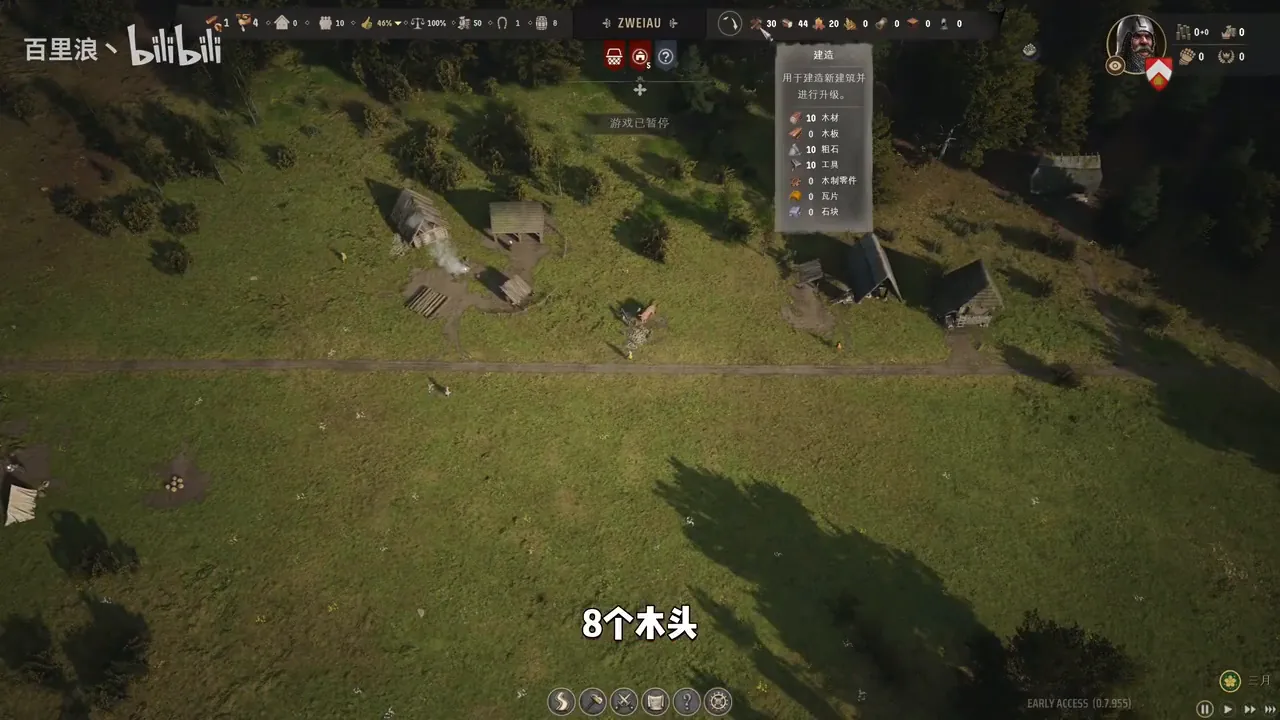
Your burgage plots are the heart of the whole game. Each occupied plot hosts one family, and families are your entire labor force. The loop is:
Build plot → family moves in → approval rises → new family arrives → build another plot → repeat.
What raises approval: - Plenty of food (variety matters more than quantity) - Warm homes (firewood supply) - Market access (build a marketplace with food stalls) - A church with spare capacity (needed for Level 2 upgrades)
What tanks approval: - Cold homes (no firewood in winter) - Single-food diets - Taxing families too early (wait until Level 2+) - Unserved families (no market stall nearby)
Since the 0.8.059 update, settlement level progression checks your family count rather than built plot levels. That means the road to bigger settlements is: keep those plots occupied and upgraded, not sprawling empty shells.
💡 Backyard trick: When you upgrade a burgage plot, you can add a backyard extension. Chicken Coops are the best early value — eggs year-round with almost no micromanagement.
Step 5: Development Points — What to Unlock First
You earn Development Points every time your settlement levels up. Click your settlement's name at the top of the UI to open the tree. These are my top early picks, in order:
| Development | Branch | Why |
|---|---|---|
| Forest Management | Farming | Doubles berry yield from deposits — early food surplus you can also export |
| Charcoal Burning | Industry | Charcoal Kiln turns 1 firewood → 2 charcoal — effectively doubles your fuel |
| Trapping | Farming | Extra food from hunting — another food variety source |
| Trade Logistics | Trade | Cuts trade route costs — start importing tools/iron sooner |
| Heavy Plow | Farming | Big efficiency boost once you move to real farming in year 2 |
Avoid locking into specialized crafts (armor smithing, deep mining, etc.) until you've seen your region's resources. The early game is about food + fuel + families, not the endgame.
Step 6: Survive Your First Winter
Winter is where the tutorial ends and the actual game begins. Here's the checklist I run through every year before the first snowfall:
- [ ] Firewood stockpile of 50+ (ideally 100+ by year 2)
- [ ] Two food types stored in the Granary
- [ ] A second woodcutter running full-time
- [ ] Burgage plots upgraded with chicken coops
- [ ] Hunting/foraging camps with caps set so they don't over-harvest
- [ ] Charcoal Kiln built if you took the development (double fuel)
A very common winter trap: your farming families go idle in winter (fields can't be worked). That's expected — reassign them to woodcutting, or use the time to build. Idle hands are a resource in Manor Lords, not a problem.
Step 7: Farms, Crafts & Trade (Year 2+)
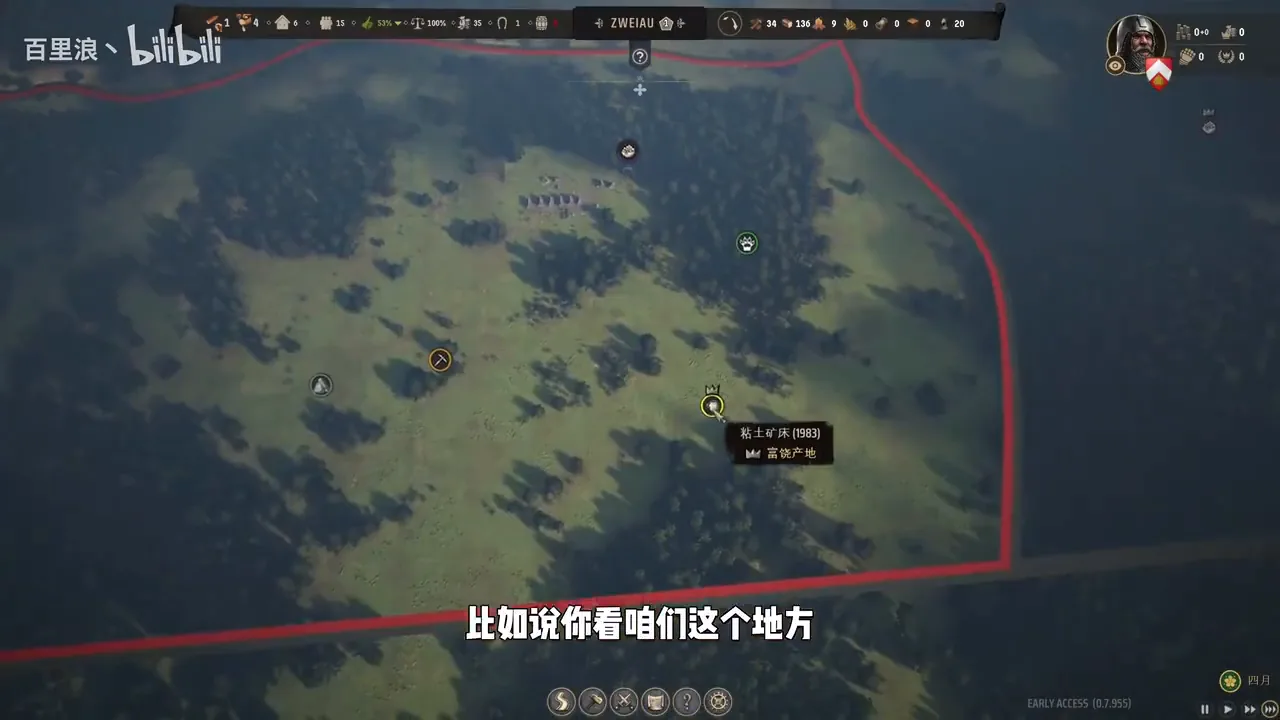
Once your village is stable, the economy opens up. The three "real" production chains worth building first:
| Chain | Field crop → Processing | Output |
|---|---|---|
| Bread | Wheat → Windmill → Bakery | The best bulk food source |
| Clothes | Flax → Linen → Weaving | Warmth for winter + export goods |
| Ale | Barley → Malt → Tavern | Approval booster once your plots hit Level 2+ |
Trade is your growth lever. Build a Trading Post, attach a horse or ox, and export what your region makes too much of (planks, wool, hides, linen) to import what it lacks (tools, iron, stone). Trade routes cost influence — another reason Trade Logistics is a top early pick.
💡 Don't build a bakery before a windmill, and don't build a windmill before a wheat field. Sounds obvious, but the game happily lets you build a whole food-processing chain with nothing feeding it. Check the production tab before placing.
Step 8: Defense — Militia, Manor & the First Raid
Even in non-"Rise to Prosperity" games, bandits start appearing once your settlement grows. Here's the defense ladder:
- Burgage plots are your army. Every adult male can be mustered into militia — equip them with whatever you can craft (spears, bows, axes).
- Build a Manor to unlock taxation, regional policies, and towers. A single well-placed tower deters early bandit groups.
- Use the terrain. A narrow bridge choke-point beats an open field every time. The 0.8 pathfinding update also means squads now fan out sensibly in open ground and file into columns on roads.
Raid math since the raider rework: bandits loot until they've taken ~half your valuables or torched ~40% of your buildings, then they leave. That means a partial defense — just stalling them — can save your village. You don't always need to wipe the band out.
The Beginner Mistakes I Made So You Don't
- Built 10 buildings on day one. Five focused buildings beat ten half-staffed ones.
- Assigned every single family. No construction workers → nothing ever gets built.
- Ignored firewood in fall. Winter fuel doubled and my first village froze in Month 2 of winter.
- Farmed in year one. Farming is labor-heavy and slow — hunt and forage first.
- Stripped the berry deposit. Setting the "cap" at ~60% keeps berries regrowing forever.
- Taxed at Level 1. Approval is fragile early; wait until your plots are upgraded.
- Built the bakery first. Check the input chain before placing processors.
- Skipped the Marketplace. Families who can't reach a stall go "unserved" and approval craters.
Manor Lords Beginner Checklist — TL;DR
- Setup: "Rise to Prosperity" on Relaxed, pick a fertile map, pause and plan.
- Hour one: Logging Camp → Woodcutter's Lodge → Storehouse → Granary → Burgage Plots → Forager Hut → Hunting Camp → Marketplace.
- Keep one family unassigned for construction, always.
- Two food types by winter, three by year 2 — berries, meat, then eggs.
- Firewood stockpile 50+ before frost — winter fuel use doubles.
- Unlock Forest Management + Charcoal Burning first in Development.
- Upgrade plots with chicken coops and keep families housed to level up.
- Build a Manor early to unlock towers and the tax you'll need later.
- Partial defense counts — stalling raiders until they leave is a win.
Manor Lords is at its most rewarding once the survival basics click and you can stop firefighting and start designing. Get the first winter right and the whole game opens up. Good luck, my lord.
Sources: Manor Lords Steam news & patch notes (0.8.059–0.8.090, Update 7), the Hooded Horse Manor Lords wiki version history, and Bilibili community tutorials by 百里浪丶 ("从零开始新手教程", 1.2M views) and 想喝可乐-bili ("新版本正确开局流程").